
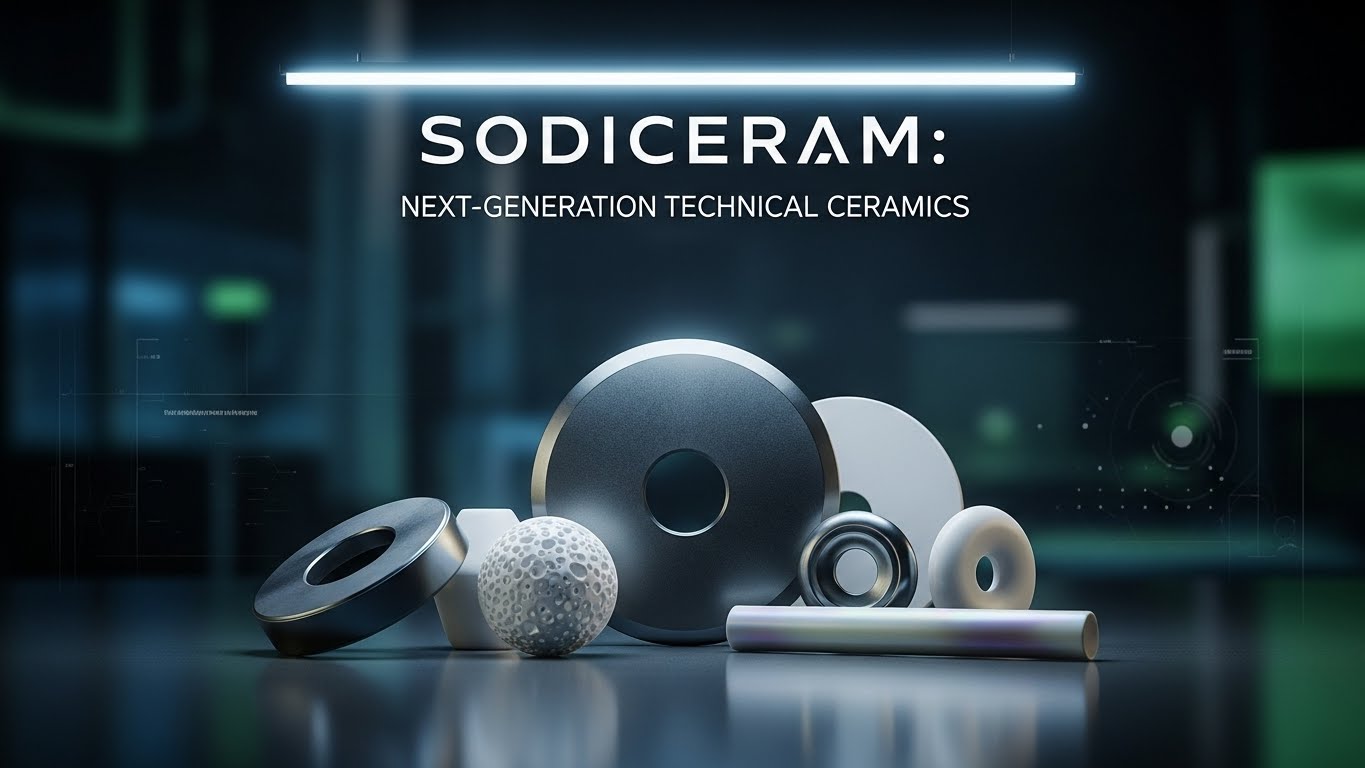
Welcome to the world of advanced materials, where innovation meets functionality. Sodiceram is at the forefront of this exciting domain—next-generation technical ceramics that are redefining what’s possible in various industries. With unique properties and unparalleled performance, Sodiceram stands out as a game-changer in material science. Whether you’re an engineer seeking reliable components or a manufacturer exploring new solutions, Sodiceram offers endless possibilities. Dive into this blog post to uncover its history, applications, and future potential that could reshape your perspective on technical ceramics.
History and Evolution of Technical Ceramics
The journey of technical ceramics began thousands of years ago. Early civilizations utilized clay for pottery and simple tools, laying the groundwork for advancements in ceramic materials.
As technology progressed, so did the understanding and production methods of ceramics. By the late 19th century, researchers explored new compositions, leading to innovations like porcelain and stoneware. These developments expanded their applications beyond decorative items.
In the mid-20th century, a shift occurred with the introduction of advanced ceramics. Engineers sought materials that could withstand extreme conditions—temperature fluctuations and corrosive environments became focal points for research.
Today’s technical ceramics are engineered products designed through meticulous processes. They serve critical roles in industries from aerospace to healthcare. The evolution continues as scientists explore even more sophisticated compounds, pushing boundaries further than ever imagined.
What Makes Sodiceram Different from Traditional Technical Ceramics?
Sodiceram stands out for several reasons. Its composition includes advanced materials that enhance durability and performance. This innovation addresses the limitations often found in traditional ceramics.
Another key aspect is its processing techniques. Sodiceram employs cutting-edge methods that allow for greater precision and customization. As a result, products can be tailored to meet specific needs across various industries.
Furthermore, the thermal stability of Sodiceram surpasses conventional options. This characteristic makes it suitable for extreme environments, where other technical ceramics might fail.
The lightweight nature of Sodiceram also adds to its appeal. It provides strength without the burden of heavy weight, making it easier to handle and integrate into existing systems.
These differences create new opportunities for application in sectors ranging from aerospace to electronics. The versatility of Sodiceram opens doors previously closed by traditional materials.
Applications of Sodiceram in Various Industries
Sodiceram is revolutionizing multiple industries with its versatility. In the aerospace sector, it is used for components that require lightweight yet durable materials to withstand extreme conditions.
In the automotive industry, Sodiceram plays a crucial role in producing high-performance parts. Its ability to endure high temperatures makes it ideal for engine components and brake systems.
The medical field also benefits significantly from Sodiceram’s properties. It’s utilized in dental applications and implants due to its biocompatibility and resistance to wear.
Electronics manufacturers are turning to this advanced ceramic for insulating materials that enhance device efficiency while maintaining compact designs.
Even energy sectors are leveraging Sodiceram in fuel cells and renewable energy technologies, showcasing its adaptability across diverse fields. The potential applications continue expanding as industries seek innovative solutions tailored to their needs.
Advantages and Benefits of Using Sodiceram
Sodiceram stands out in the realm of technical ceramics due to its superior properties. Its exceptional thermal stability makes it ideal for high-temperature applications. This feature allows industries to utilize Sodiceram where traditional materials may fail.
Another advantage is its impressive mechanical strength. The durability of Sodiceram translates into longer-lasting components, reducing maintenance costs and downtime. Businesses can rely on this material for demanding environments.
Additionally, Sodiceram exhibits excellent chemical resistance. It withstands harsh substances without degrading, making it suitable for various industrial settings.
Lightweight yet strong, products made from Sodiceram enhance performance while minimizing energy consumption during operation.
When considering sustainability, this innovative ceramic has a lower environmental impact compared to conventional materials. Its production process also tends to generate less waste.
These advantages combine to make Sodiceram a compelling choice across multiple sectors such as aerospace, automotive, and electronics.
Future Potential and Innovations for Sodiceram
The future of Sodiceram is ripe with potential. As industries evolve, the demand for advanced materials grows. This creates opportunities for innovations that expand the capabilities of this next-generation technical ceramic.
Research in nanotechnology could enhance Sodiceram’s properties further. Imagine a material that’s even lighter yet stronger, capable of enduring extreme conditions.
Sodiceram’s adaptability will also allow it to be integrated into smart technologies. Think about sensors embedded within ceramics that monitor structural integrity in real-time.
Collaboration across industries presents another exciting avenue. Partnerships between tech firms and manufacturers can lead to breakthroughs we have yet to envision.
The focus on sustainability will drive developments too. Eco-friendly production processes may redefine how Sodiceram is made, reducing waste while maintaining quality and performance standards.
These advancements hint at a vibrant future where Sodiceram plays an integral role across multiple sectors, pushing boundaries with each innovation.
The Future of Technical Ceramics with Sodiceram
The future of technical ceramics is bright, especially with innovations like Sodiceram leading the way. As industries demand more durable and efficient materials, Sodiceram rises to the occasion.
This next-generation ceramic promises a blend of strength and versatility. Its unique properties set it apart from traditional options, making it ideal for advanced applications in aerospace, automotive, and electronics.
Research continues to explore its potential. Scientists are investigating new formulations that could enhance performance even further. The adaptability of Sodiceram opens doors to previously unimaginable uses.
As sustainability becomes a priority worldwide, Sodiceram holds promise for eco-friendly manufacturing processes too. This material can contribute to greener technologies by reducing waste while maintaining high standards of quality.
With ongoing developments on the horizon, it’s clear that Sodiceram will play a crucial role in shaping the landscape of technical ceramics moving forward. Exciting times lie ahead for this innovative material.
Conclusion
Sodiceram stands at the forefront of technical ceramics, revolutionizing how industries think about materials. Its unique properties and capabilities open doors to new applications that were once unimaginable. As technology advances, Sodiceram is poised for even greater innovations, further solidifying its place in various sectors.
The advantages of using are not just theoretical; they translate into tangible benefits for businesses looking to enhance productivity and efficiency. From aerospace to electronics, its versatility allows it to meet diverse needs while delivering exceptional performance.
As companies continue to explore the potential of next-generation materials like the future looks promising. Innovations will likely emerge that push the boundaries of what’s possible with ceramics. The journey ahead is filled with possibilities as more industries adopt this cutting-edge material.
With each advancement, Sodiceram could redefine standards within technical ceramics and beyond. Its evolution promises a transformative impact on manufacturing processes and product development across multiple fields. This shift may lead us into an era where traditional limitations fade away in favor of unprecedented opportunities driven by innovation and creativity through advanced ceramic technologies.